FAST FIRST.
DIRT READY.
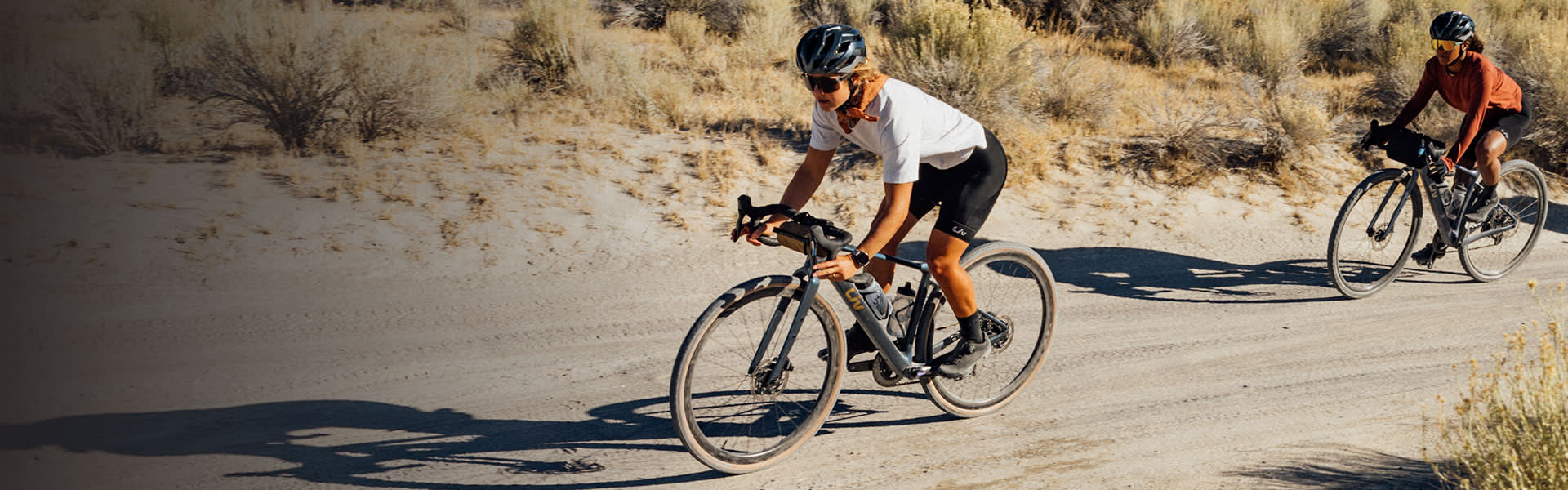
Light frames, efficient positions and responsive handling make gravel-race bikes quick on hardpack, tarmac and long competitive events.
GRAVEL BIKE BUYER’S GUIDE
Some gravel bikes are road-race machines with bigger tyres. Others are built to carry everything for days away—or tackle terrain that once belonged to mountain bikes. The right answer depends on surface, pace, luggage and how far from home you want to go.
BACK TO THE BIKE FINDER ↑Every category overlaps. Think of these as useful starting points rather than rules written in stone.
Light frames, efficient positions and responsive handling make gravel-race bikes quick on hardpack, tarmac and long competitive events.
Adventure bikes prioritise stability, comfort, durability and places to carry kit. They suit long days, remote routes and multi-day trips.
An all-road bike feels close to an endurance road bike but adds wider tyres, better control and the freedom to link lanes with smooth tracks and byways.
Slacker geometry, bigger tyres, dropper posts and short-travel suspension push gravel bikes deeper into technical trails while keeping drop-bar efficiency.


Tyres, wheels and gearing often make a bigger difference than a small change in frame weight. Prioritise these for your roughest regular route.
40–45 mm works for fast mixed riding. 45–50 mm+ adds grip and comfort on rougher ground. Check real clearance around the tyre—not just the number in the catalogue.
700c rolls efficiently and offers huge tyre choice. 650b creates room for bigger-volume tyres and can feel more agile on smaller frames and rough trails.
1x is simple, quiet and gives space around the tyre, but has wider jumps between gears. 2x gives closer road ratios and a wide range for fast, varied routes.
A dropper seatpost gives extra manoeuvrability when riding on rough ground and steep descents.
Buy tyre clearance before you buy upgrades. You can fit a quicker tyre later—you cannot create more space in the frame.
Multiple mounts make a gravel bike adaptable, but only when they match the bags and kit you will actually carry. Think about your longest intended trip before buying.
FUEL AND ESSENTIALS WITHIN REACH.
Bolts on the top tube secure a small bag without straps sliding around the frame.
BOTTLES, FRAME BAGS AND STORAGE.
Two bottle positions are useful. A third under the down tube adds capacity, while generous triangle space helps a frame bag fit properly.
CARGO WITHOUT OVERLOADING THE BARS.
Three-pack bosses on each fork leg can carry cages, bottles, small dry bags and that essential bottle of bourbon.
VERSATILITY FOR REAL-WORLD RIDING.
Rear rack and mudguard eyes make commuting, winter training and traditional touring far easier.
More mounts do not automatically make a better bike—but they can turn one bike into far more adventures.
Gravel geometry balances efficiency with stability. Small differences decide whether a bike feels sharp and quick or calm when the surface gets rough and the bags get heavy.
More stack and less reach feels upright and relaxed. Lower stack and longer reach create a faster, more purposeful posture.
A longer wheelbase feels planted on rough descents and with luggage. A shorter one changes direction more quickly.
A slacker front end generally feels calmer on steep or loose terrain; steeper race geometry feels faster and more direct.
More drop adds planted cornering. Extra height adds pedal clearance on rocky ground. The designer chooses the compromise.

When a ride goes beyond the easy way home, dependable kit matters. Hydraulic brakes, sensible gearing, common replacement parts and well-protected cables all make a gravel bike easier to live with.
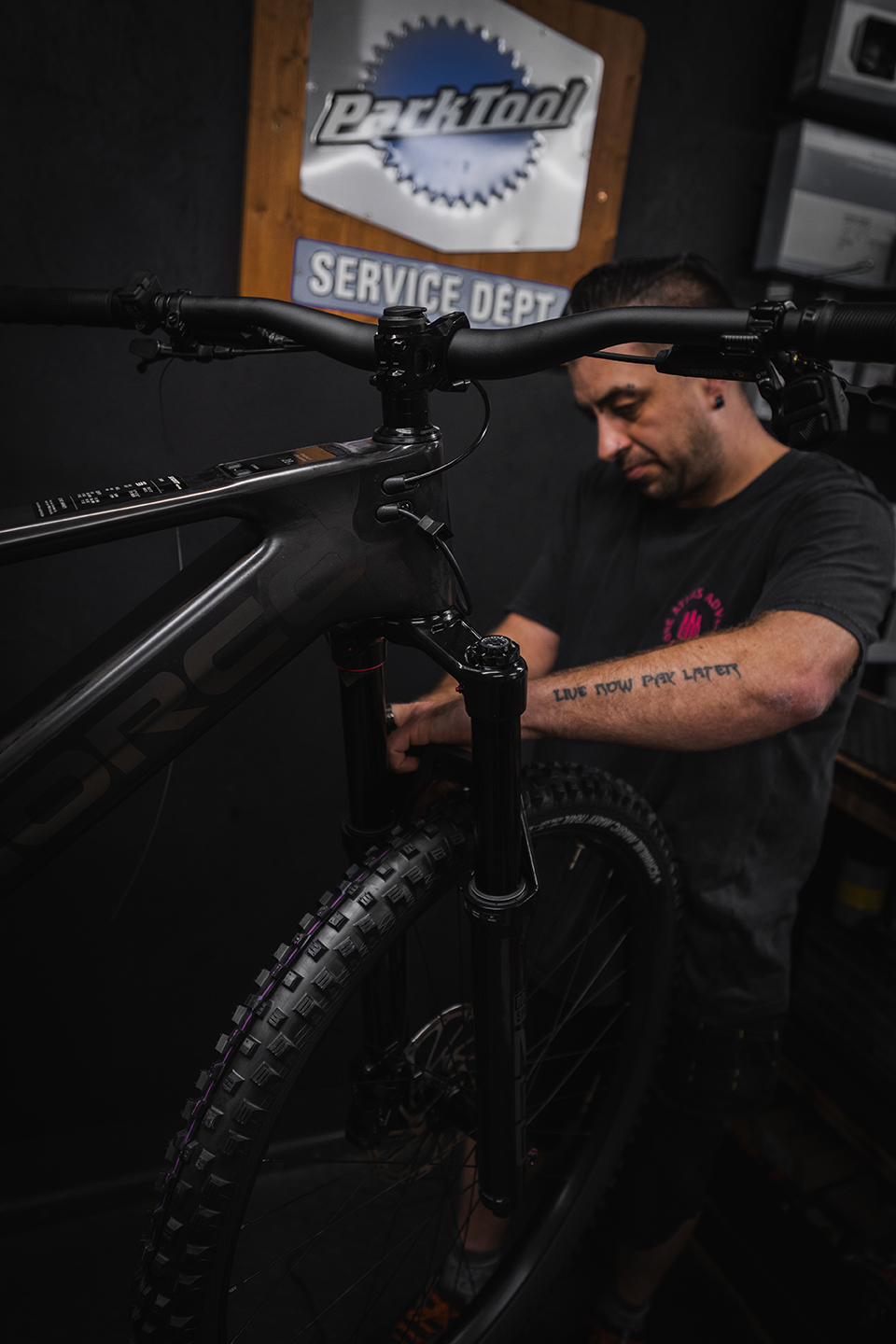
We can help set tyre pressure, tubeless, controls and luggage so the complete bike works—not just the specification sheet.
Meet Service WorksA useful gravel-bike conversation starts with where you genuinely want to ride.
Tell us where you want to go, what you want to carry and how you like to ride. We’ll help you choose a bike that makes the next turning difficult to ignore.